

Old Oil Is Expensive Oil
Every time you drive, heat and combustion by-products break oil down a little more. Additives get used up, it thickens with soot, and its film between moving parts gets thinner.
Turbocharged petrol engines and modern diesels are especially fussy. Turbo bearings spin at enormous speed and rely on clean oil, while diesels produce more soot that the oil has to hold in suspension.
Changing oil and filter on time is cheap. Replacing a worn turbo, timing chain or camshaft is not. That's the trade-off, in one sentence.
Mineral, Semi or Full Synthetic?
Your engine's handbook specifies a viscosity (like 5W-30) and a performance standard. We match both. Here's what the main types mean in practice.
| Type | What it is | Typically suits |
|---|---|---|
| Mineral | Refined from crude with a basic additive pack | Older, simpler engines designed around it |
| Semi-synthetic | A blend of mineral and synthetic base oils | Many everyday petrol engines from the 2000s |
| Full synthetic | Engineered base oils that resist heat and breakdown | Turbo engines, modern diesels, most European cars |
| Low-SAPS / diesel spec | Formulated to protect particulate filters and catalysts | Diesels with a DPF and some late-model petrols |
Reading "5W-30": the first number describes cold-start flow (lower flows more easily when cold), the second describes thickness at operating temperature.
More Than a Drain and Fill
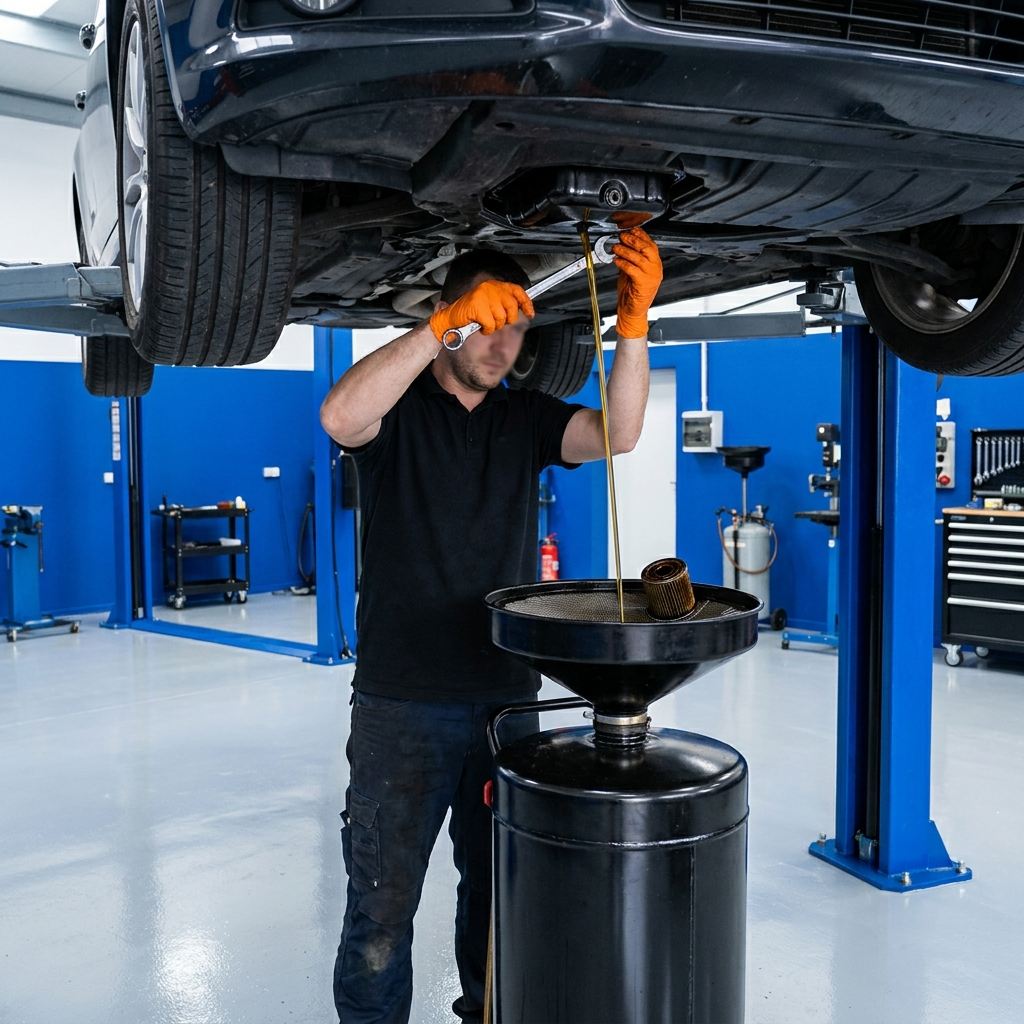
Drain warm
Oil flows out more completely when it's warm, carrying more of the suspended dirt with it.
New filter
A fresh oil filter every time. A clogged one can force oil through its bypass, unfiltered.
New sump washer
The drain plug gets a new crush washer where required and is tightened to spec, not by feel.
Leak check
Rocker cover, sump and seals inspected for weeps that could become bigger leaks.
Underbody look
Exhaust, CV boots and suspension get a glance while we have the car on the hoist.
Reset reminder
Service light reset and a sticker with the next change due.
Kilometres or Months, Whichever Comes First
Many modern cars quote 10,000 to 15,000 km between changes, and some European models allow longer with specific oils. The months matter too, because oil ages even when the car sits in the driveway.
Short trips around Malaga and Morley, lots of idling, towing a van or a boat, and dusty 4WD tracks all count as severe use. If that sounds like your week, a shorter interval is cheap peace of mind.
Oil changes are part of every regular maintenance service, or we can do one on its own between services.

Draining, Refilling and Treating


In, Out, and Happy
“Just had my Ford Ranger Wildtrak serviced here. Very good service. Extremely Helpfull and welcoming. A great find!”
“Just got my corola and get the best service”
“Great service from Stephen. Great workmanship from the team. Fair pricing and and a job well done.”
Oil Change Questions
Can I bring my own oil?
Talk to us first. If it's the correct grade and specification for your engine we can usually use it, but we'll tell you if it isn't a match.
Why is my engine using oil between changes?
Some engines consume a little by design, but steady loss can point to worn piston rings, valve stem seals, a turbo seal or an external leak. We can check where it's going.
Is it okay to go a bit over the interval?
A few hundred kilometres won't hurt, but making a habit of it shortens engine life, particularly on turbo engines. Treat the sticker as a deadline, not a suggestion.
Does an oil change include a new filter?
Yes, every time we change the oil.


